

Easiest thing is to start with an email…
THE PRIVILEGE OF WORKING WITH THE FOLLOWING ORGANISATIONS IS GRATEFULLY ACKNOWLEDGED…






Meet David Fraser – engineering leadership consultant and business coach
Based in Glasgow, Dr David Fraser is an author, speaker, change agent, business coach, leadership development consultant, strategist, critical friend, trusted adviser, interventionist (please pick your preferred label!) with a background in systems engineering, programme management, and technologically or operationally intensive businesses, and an expertise in transformational leadership and influence in complex organisations. An engineer by profession, David unusually combines analytical, professional, and managerial skills on the one hand, with systematic, insightful, and skillfully intuitive approaches and expertise in leadership development and personal growth on the other. Sometimes it comes down to helping people have honest conversations safely. This adds up to a unique and powerful capability.
Modes of leadership coaching delivery depend on your situation. They can include specific interventions and support, individual and team coaching, large group facilitation, open workshops, and talks on leadership, change, and interpersonal effectiveness. Based in Glasgow, David works at both board level and the “messy middle”—that part of organisations where complexity is manifest and conflicting priorities and ambiguities must be reconciled. Development of leadership development and successful implementation of strategy is usually central, as is setting up processes, systems, and structures to stimulate and support a high performance and empowered workforce.
Books by Dr David Fraser
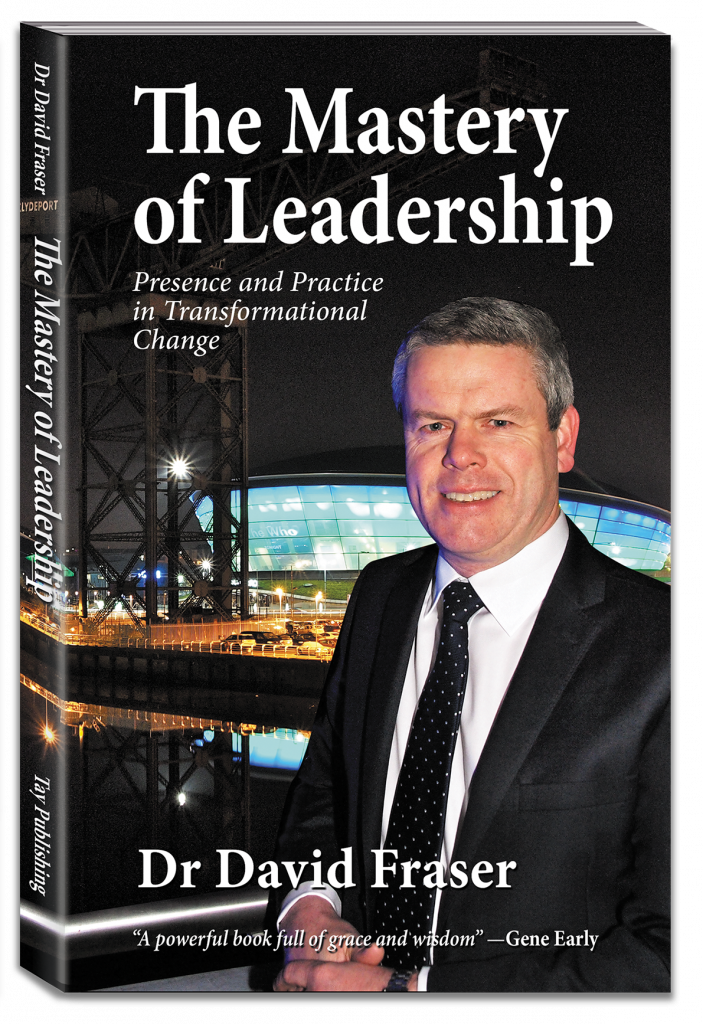
The Mastery of Leadership: Presence and Practice in Transformational Change
Master the art of transformational leadership: The Mastery of Leadership brings together the tangible and intangible dimensions each so vital to success—and yet so rarely brought together—and enables you to bring out the best in other people in a sustainable way. In this bold and thought-provoking …
An extremely thought provoking and conscience prodding read. David really underscores the results that can flow from true values based leadership
Amanda McMillan, Chief Executive Officer, AGS Airports Limited
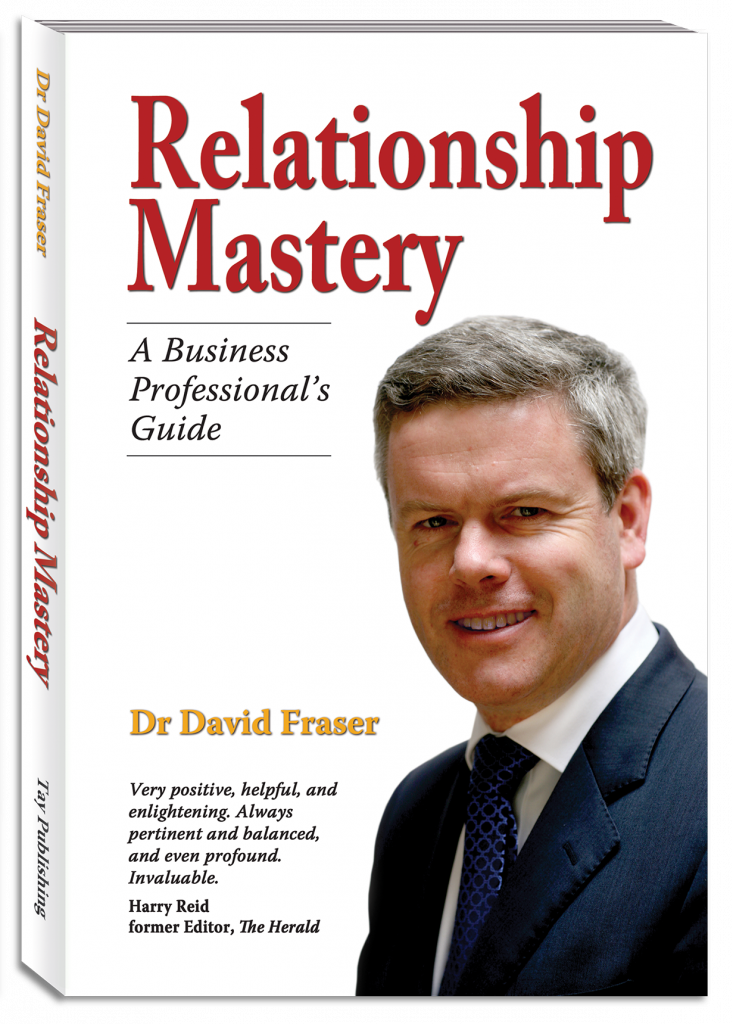
Relationship Mastery: A Business Professional’s Guide
The ability to relate to other people is the most critical skill a person can ever have—at work, at home, or anywhere else—and strong relationship skills simply make everything else easier. Relationship Mastery: A Business Professional’s Guide provides a reliable route to success you can apply over and over to improve your life in every area …
With some books you just know that it is going to be worth every moment spent with it. This is one of those books. David is practical and has a logical way of thinking which is missing in many authors’ approaches to subjects like this. He combines the pragmatic with the creative… quite a talent. This is a superb book full of practical advice. Once I opened this I just knew that it would be one of those books that I come back to time and time again. It is easy to read and invaluable. I recommend this highly.”
sue knight, international consultant and author
Latest Short Articles
Hone your leadership, enterprise, and interpersonal skills by reading the latest ideas and insights from an authority in the field…

The (foregone) opportunity of dialogue at large events
A series of well-informed and insightful speakers with some Q&A can make for a great event. An even better one might involve getting the…
Continue Reading The (foregone) opportunity of dialogue at large events
Reading the manual – understanding human interaction
I’m not the first to say this, I know, but it’s worth repeating: We gain from learning to understand more about how people interact.…
Continue Reading Reading the manual – understanding human interaction

What’s your habitual time unit of focus? And is it the only one you need?
What’s your habitual time unit of focus? An hour, a day, a week, a month – or more – or less? What quantum of…
Continue Reading What’s your habitual time unit of focus? And is it the only one you need?